✨ 10 Common Lighting Mistakes Indian Homes Make Without Realising
Lighting is one of the most powerful elements in a home — and also the most misunderstood.
In many Indian homes, lighting decisions are made quickly, often copied from neighbours, builders, or showroom displays. The result? Homes that look fine during the day, but feel harsh, dull, or unfinished at night.
What makes it worse is that most of these mistakes go completely unnoticed.
Let’s uncover the 10 most common lighting mistakes Indian homes make — and why fixing them can instantly transform how your home looks and feels.
- 💡 Relying on a Single Ceiling Light in Each Room
This is the most common mistake of all.
One tube light or panel light in the centre of the ceiling is expected to light the entire room. Instead, it creates harsh shadows, dark corners, and a flat, lifeless space.
Good lighting is never about one source. Homes that feel warm and premium always use multiple light points working together.
- ❄ Using Cool White Light Everywhere
Cool white (6500K) lighting is everywhere in Indian homes — living rooms, bedrooms, even dining areas.
While it looks “bright,” it kills warmth instantly. Skin tones look dull, walls feel cold, and the space starts resembling an office or hospital.
Most comfortable homes use warm or neutral lighting, especially in areas meant for relaxing.
If you want to understand how color temperature affects mood and interiors, this guide explains it well:
- 🎨 Mixing Different Light Colors Randomly
Warm light in one corner, cool light in another, neutral white in between — all in the same room.
This happens more often than people realise, especially when lights are added over time.
The result is visual confusion. Even good interiors start looking messy and unplanned when lighting colors don’t match.
Consistency in color temperature is key to a calm, cohesive space.
- 📍 Poor Placement of Lights
Lights are often placed based on wiring convenience, not design.
Panels are pushed to the centre. Spotlights are installed without purpose. Corners are forgotten completely.
Lighting should guide the eye, highlight walls, and create depth. When placement is wrong, even expensive lights fail to impress.
- 👑 Overusing Spotlights
Spotlights are useful — but only when used thoughtfully.
Many Indian homes overload ceilings with spotlights, assuming more lights mean better lighting. Instead, this creates glare, visual clutter, and discomfort.
Spotlights should highlight specific elements, not flood the entire room.
- 🧱 Ignoring Wall Lighting Completely
Walls are the largest visible surfaces in a room, yet most Indian homes leave them completely dark.
When walls aren’t lit, rooms feel flat and boxed in — regardless of how bright the ceiling lights are.
Wall lighting adds depth, texture, and a sense of design maturity that ceiling lights alone can’t achieve.
- 🔆 Choosing Brightness Without Control
Either the room is too bright…
or too dim.
There’s rarely a middle ground.
Homes without layered lighting or dimming options force one lighting mood for all situations — guests, relaxation, TV time, or late nights.
Controlled brightness is what makes a space feel comfortable and premium.
For clarity on brightness and lumens, this resource explains it simply:
- 🕰 Treating Lighting as an Afterthought
In most Indian homes, lighting is planned after:
- Furniture
- Paint
- False ceiling
By then, options are limited and compromises are made.
Lighting should be planned alongside interiors — not added at the end like an accessory.
- 🏠 Using the Same Lighting Style in Every Room
Every room has a different purpose, yet many homes use the same lights everywhere.
Bedrooms, living rooms, kitchens, and dining areas all need different lighting moods. When lighting isn’t customised room-wise, the home feels generic and uninspiring.
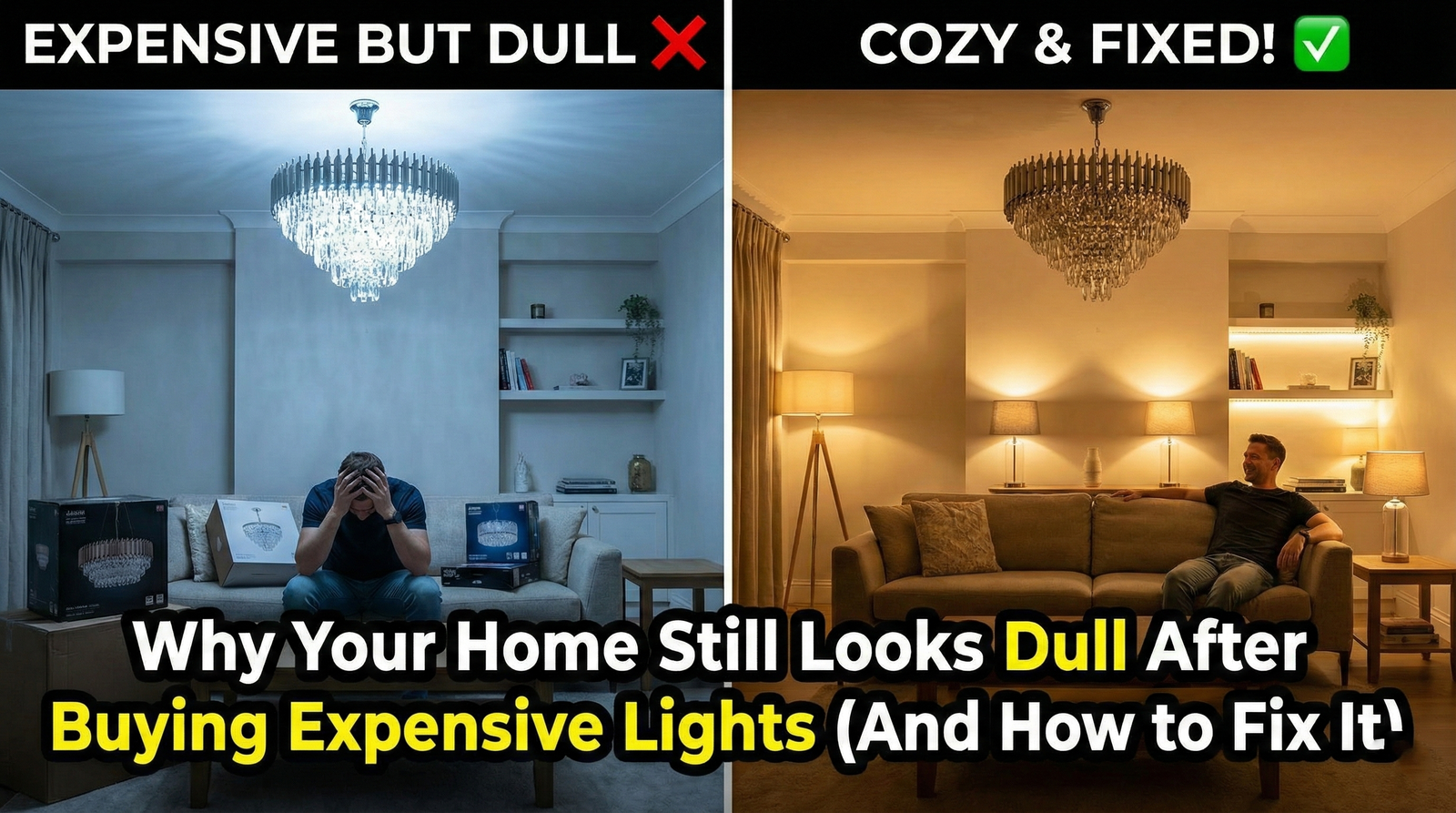
- ✨ Believing Expensive Lights Will Fix Everything
This is the most expensive mistake.
Buying premium lights without proper planning often leads to disappointment. A costly fixture cannot compensate for bad placement, wrong color temperature, or lack of layering.
Luxury doesn’t come from the price of the light — it comes from how the light shapes the space.
🌟 Final Thought: Good Lighting Is Felt, Not Noticed
When lighting is done right, you don’t consciously notice it.
You just feel comfortable. Calm. At home.
Most Indian homes don’t need more lights — they need better lighting decisions.
Fixing even a few of these mistakes can completely change how your home looks at night.