


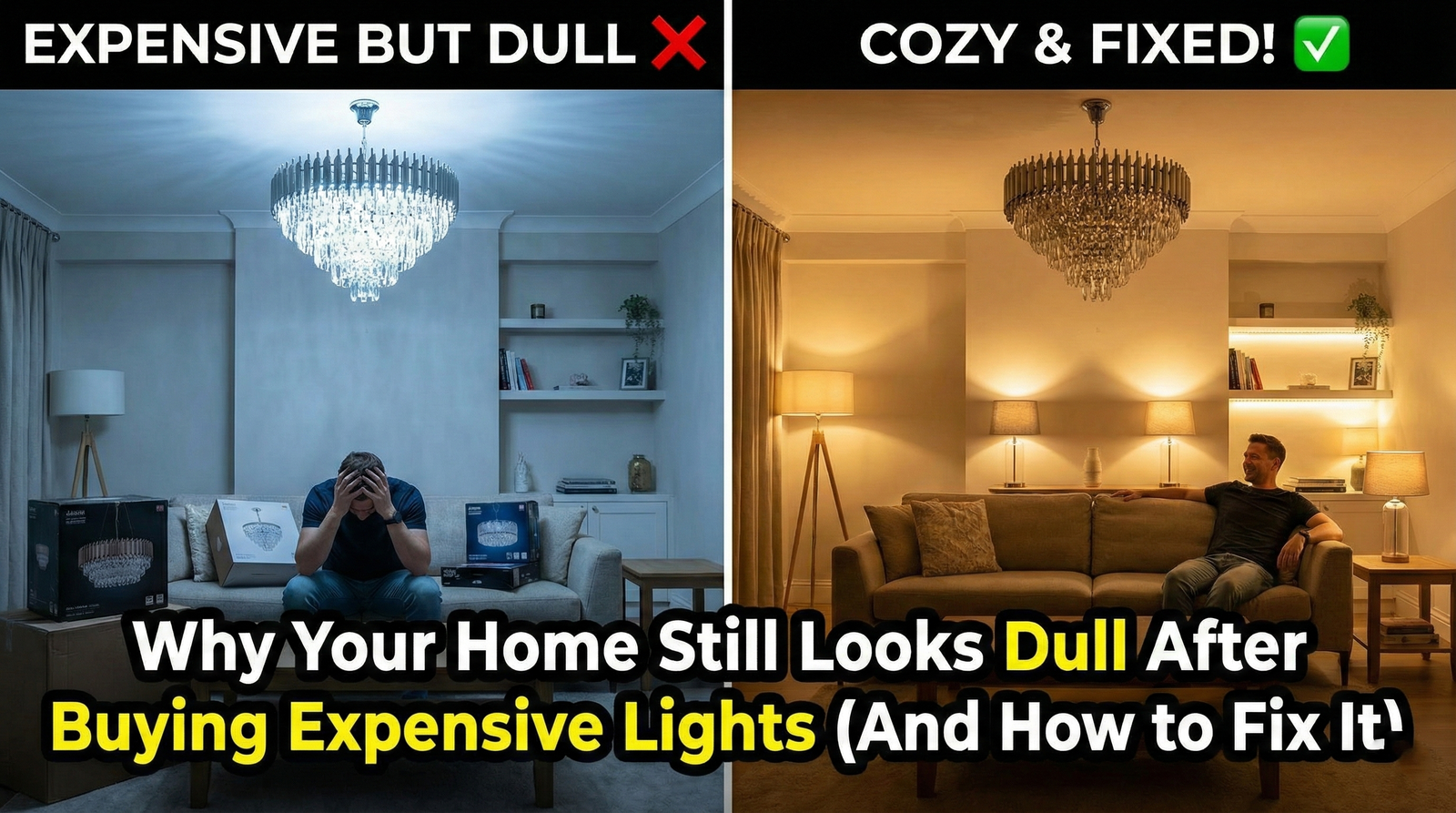
✨ Why Your Home Still Looks Dull After Buying Expensive Lights
And how to finally fix it—without wasting more money
You spent serious money on lighting.
Designer chandeliers. Premium wall lamps. Fixtures that looked stunning in the showroom 💡
So when everything was installed, you expected your home to feel luxurious.
But when the lights came on…
it still felt flat, dull, and underwhelming.
If that sounds familiar, you’re not alone. This happens in far more homes than people admit. And in most cases, the lights aren’t the problem.
👉 The real issue is this: lighting was treated as a purchase, not a design system.
Let’s break this down properly.
- 💰 Expensive Lights Don’t Automatically Mean Good Lighting
Here’s an uncomfortable truth most brands won’t tell you:
A ₹30,000 light installed without planning can look worse than a ₹3,000 light installed thoughtfully.
Many homeowners assume that a premium fixture will instantly elevate the space. But lighting doesn’t work like furniture or décor.
What actually creates a luxury feel is how light spreads through the room, how it interacts with walls and surfaces, and how multiple light sources work together.
A single statement light—no matter how expensive—cannot carry an entire room on its own.
Luxury lighting is always layered, even when it looks effortless.
- 🎨 The Silent Mood Killer: Wrong Color Temperature
One of the biggest reasons homes look dull at night is the wrong color temperature.
Cool white lighting may appear bright and clean in stores, but inside a home it often feels harsh and lifeless. Living rooms and bedrooms lit this way lose warmth and comfort almost instantly.
High-end interiors rely heavily on warm light. Warm lighting softens shadows, enhances textures, and makes spaces feel calm and inviting.
When warm and cool lights are mixed randomly in the same room, even expensive fixtures start to look cheap.
For a deeper understanding of color temperature, Philips Lighting explains it clearly here:
- 📍 Poor Light Placement Flattens Beautiful Interiors
Another common mistake is depending on a single ceiling light to illuminate the entire room.
When light comes from one point, shadows become harsh, corners disappear into darkness, and the room loses depth. This is why many homes look fine during the day but disappointing at night.
Well-designed lighting spreads across the space. When walls, corners, and architectural elements receive light, the room instantly feels richer and more intentional—something even the most expensive chandelier cannot achieve alone.
- 👑 Statement Lights Need Supporting Lights
Chandeliers and sculptural lights are designed to be focal points, not complete lighting solutions.
When a statement light is installed without support, it often feels isolated. The fixture looks impressive, yet the room still feels unfinished.
Once subtle wall lighting and indirect light sources are added around it, everything changes. The main light starts to feel intentional, and the space finally comes together as a whole.
- 🔆 Brightness Isn’t About Wattage
Another widespread misconception is equating brightness with wattage.
Too much brightness washes out materials, creates glare, and feels uncomfortable. Too little brightness makes spaces feel dull and hides design details.
Luxury lighting is about controlled brightness, distributed across multiple light sources rather than one overpowering fixture.
For a clear explanation of lumens versus watts, Energy.gov explains it well here:
- 🧱 Why Wall Lighting Changes Everything
Walls are the largest visible surfaces in any room. If they’re left dark, the entire space feels flat—no matter how premium the ceiling lights are.
Homes that feel truly luxurious almost always have light on vertical surfaces. Wall lighting adds depth, highlights textures, and creates visual comfort.
This is often the missing piece in homes that look dull despite expensive lighting.
- 🕰 The Real Problem: Lighting Is Usually an Afterthought
In most homes, lighting decisions come last. Furniture is finalized, paint colors are chosen, décor is placed—and only then does lighting enter the conversation.
By that point, options feel limited.
The good news is that this can still be fixed. A simple walk through your home at night will reveal dark corners, harsh spots, and areas that feel visually uncomfortable. In many cases, the solution isn’t buying new expensive lights—it’s rethinking placement and layering.
✨ Final Thought: Luxury Is a Feeling, Not a Fixture
A home feels luxurious when the light is calm, warm, and intentional.
When walls glow softly.
When shadows feel natural.
When brightness never feels aggressive.
💡 Expensive lights are just tools.
Thoughtful lighting design is what makes them shine.


Great content! Keep up the good work!